OUT OF THE GREAT WIDE OPEN
Selected Works 2020-2024
8.5 x 11 Inches
204 Pages
With Dust Jacket
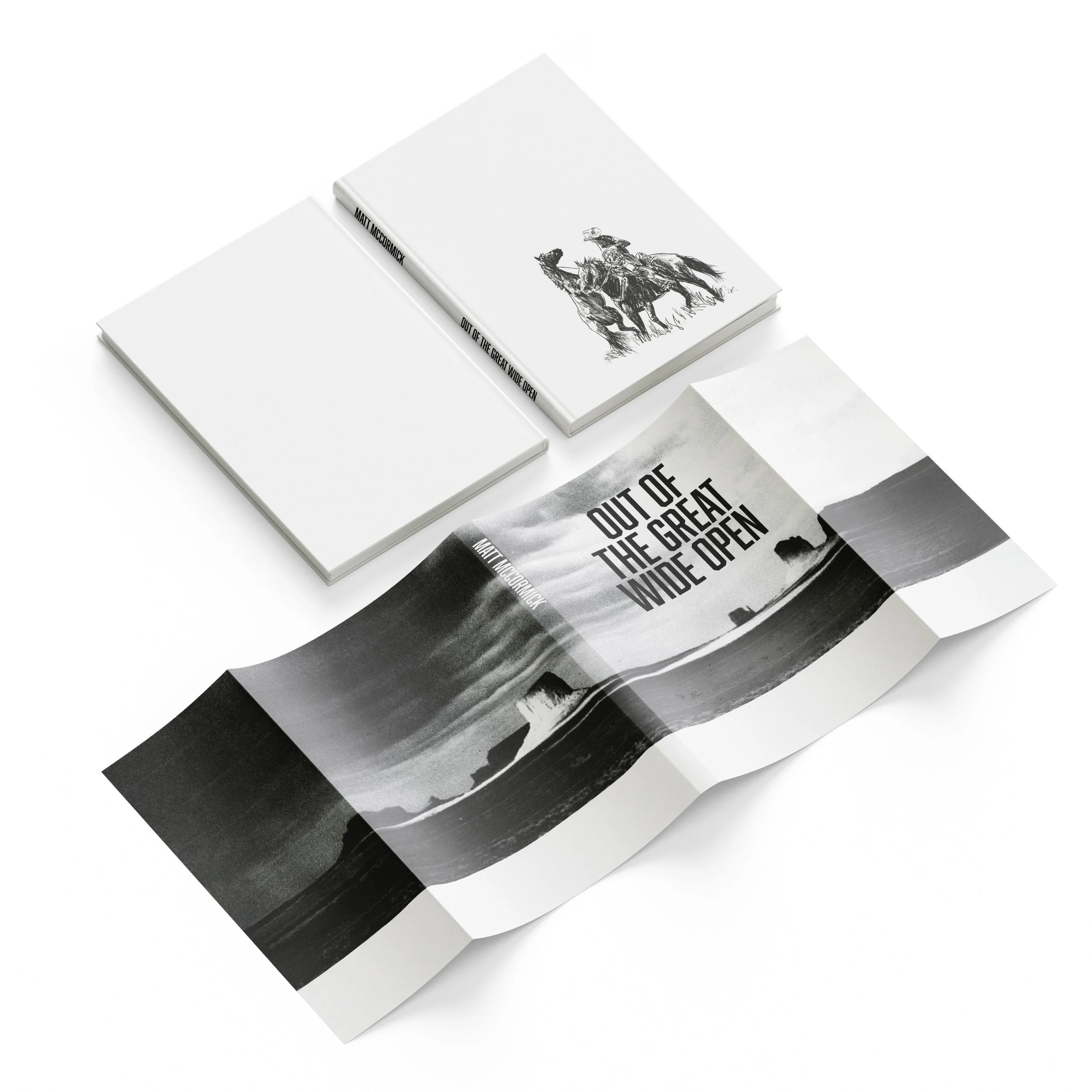
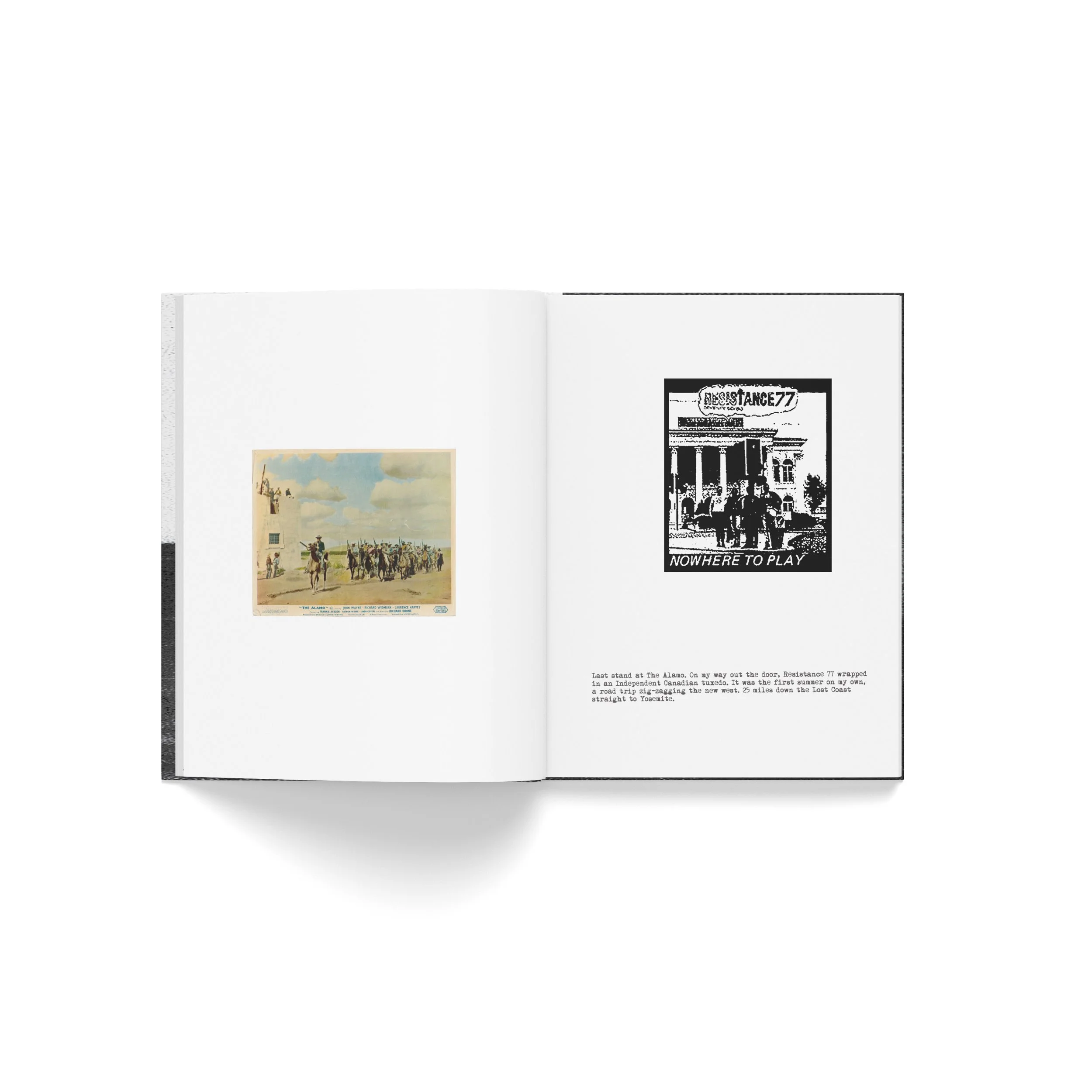
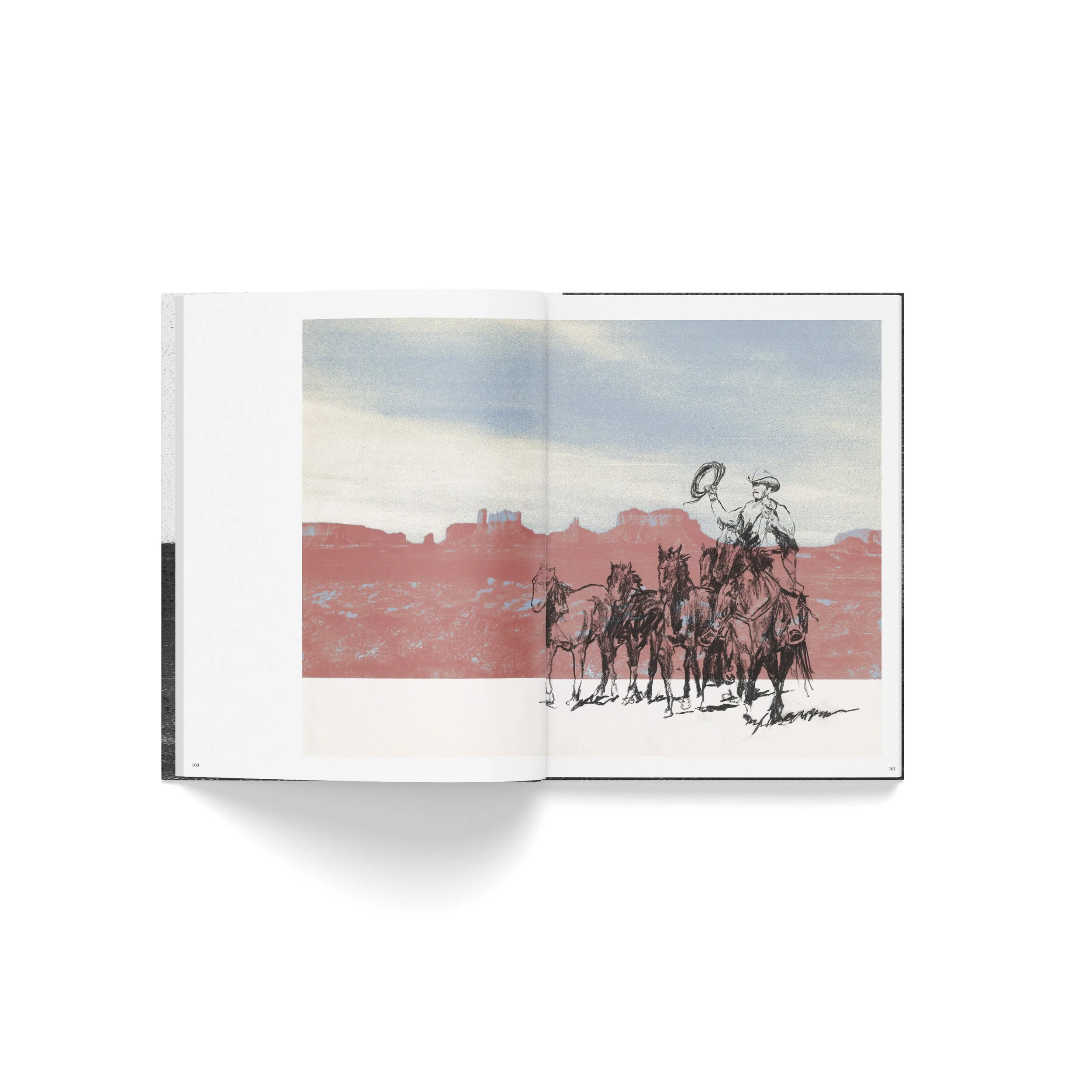
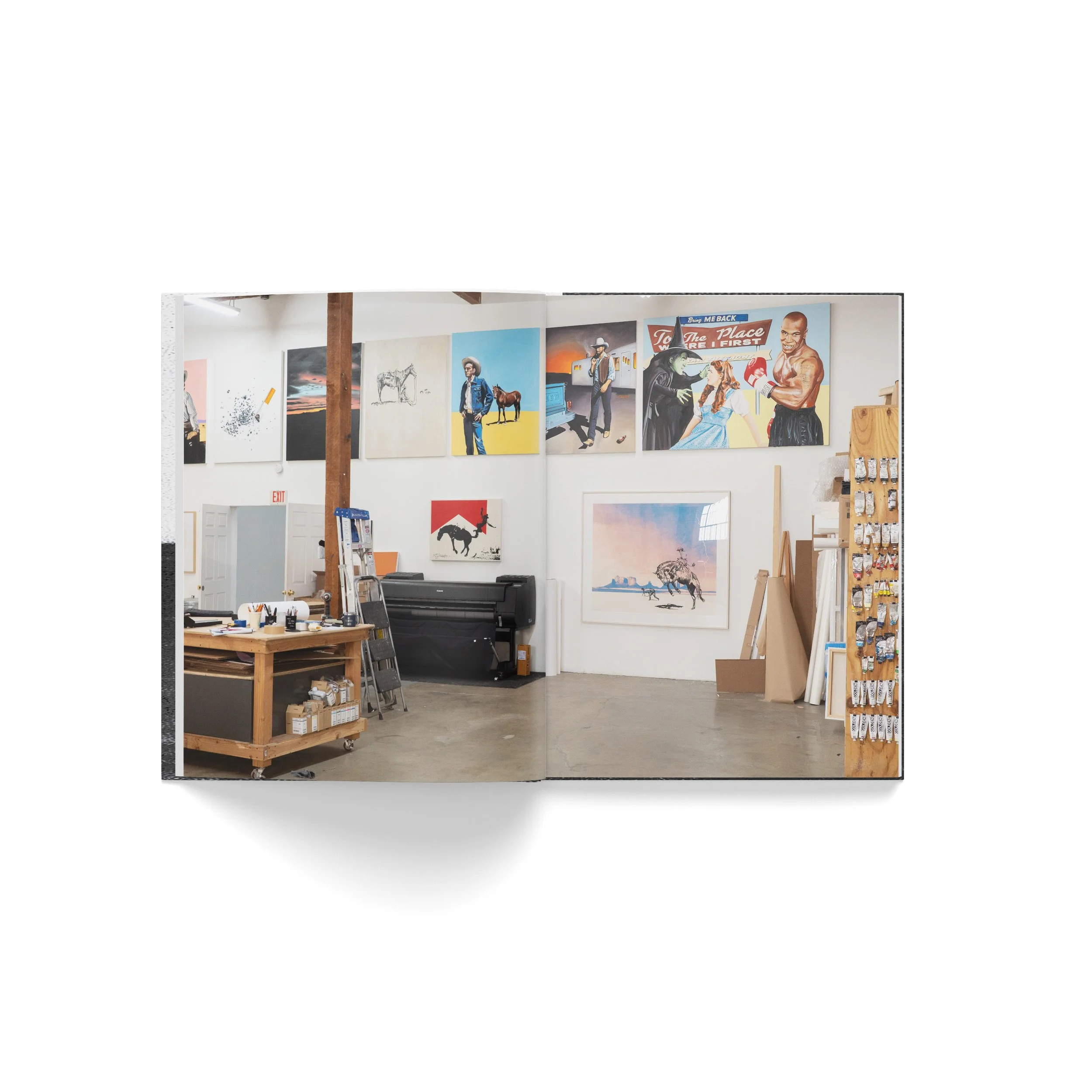
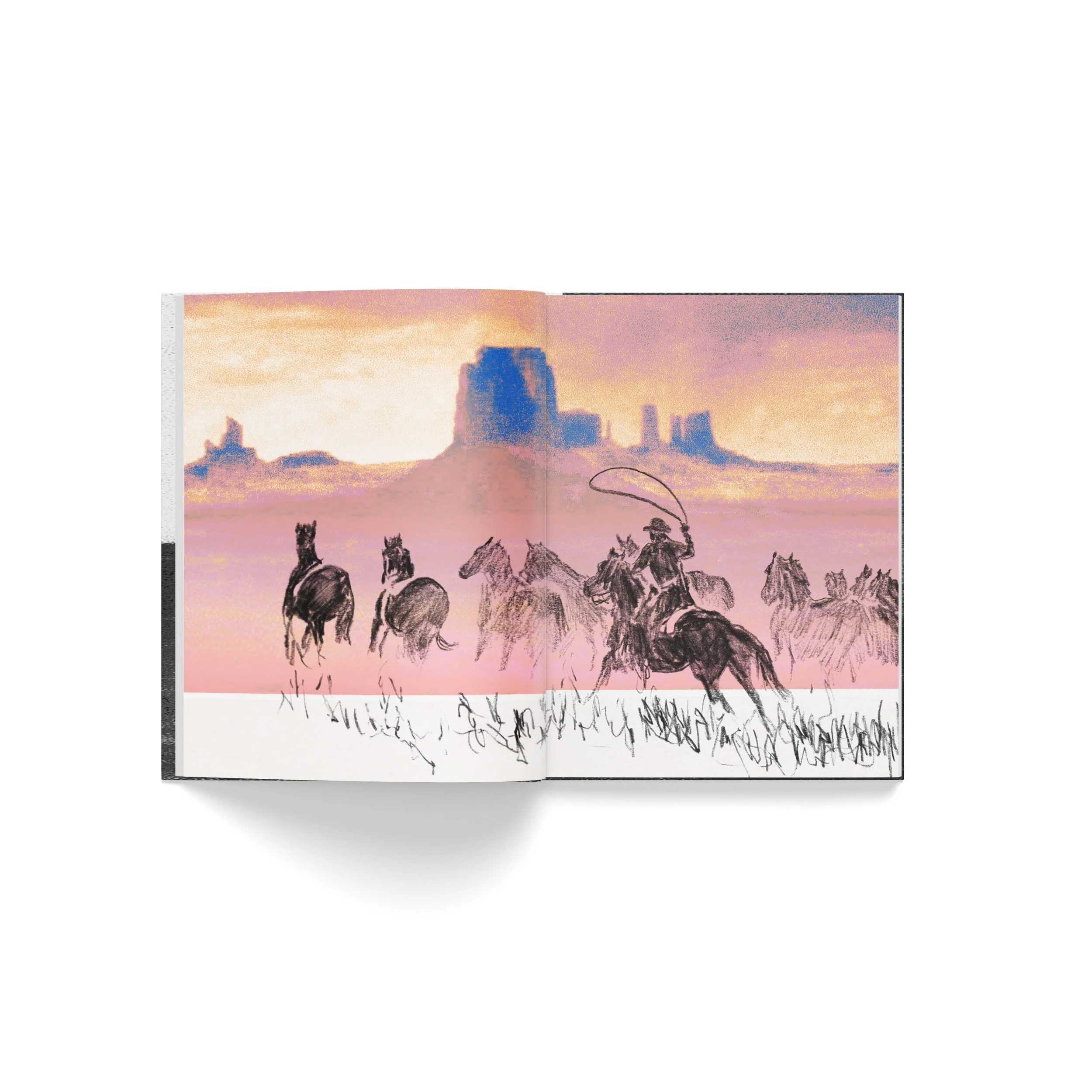
Since its inception in 2015, Matt McCormick’s Into The Distance series has employed modern technology to probe the enduring allure of the American West, drawing on the legacy of artists like Frederic Remington and Charles M. Russell. Working between Los Angeles and a smaller New York studio, McCormick initially faced spatial limitations, which prompted a resourceful approach to his process. Using found images from the internet as references, he crafted gestural cowboy figures set against manipulated, lo-fi landscapes, often printed with a damaged printer. This technique imbued the backgrounds with a raw, gritty texture reminiscent of xeroxed punk flyers, embracing the tactile imperfections that are often erased in today’s digital image-making. The result was a compelling tension between McCormick’s expressive, charcoal-rendered cowboys and the roughly printed landscapes—a juxtaposition that became the backbone of the series, reframing the American West as both mythic and fractured.
In the five years that followed, Into The Distance evolved as McCormick ventured deeper into the landscapes he depicted. Frequent trips through the South and Midwest allowed him to replace found images with his own photographs, lending a more intimate, firsthand connection to the work. Yet, he retained the rough, lo-fi aesthetic, weaving his personal experiences into the textural grit that defined his early pieces. This melding of traditional Western themes with punk-inflected visual tactics produced a body of work that feels both immediate and historically aware—a collision of reverence and rebellion.
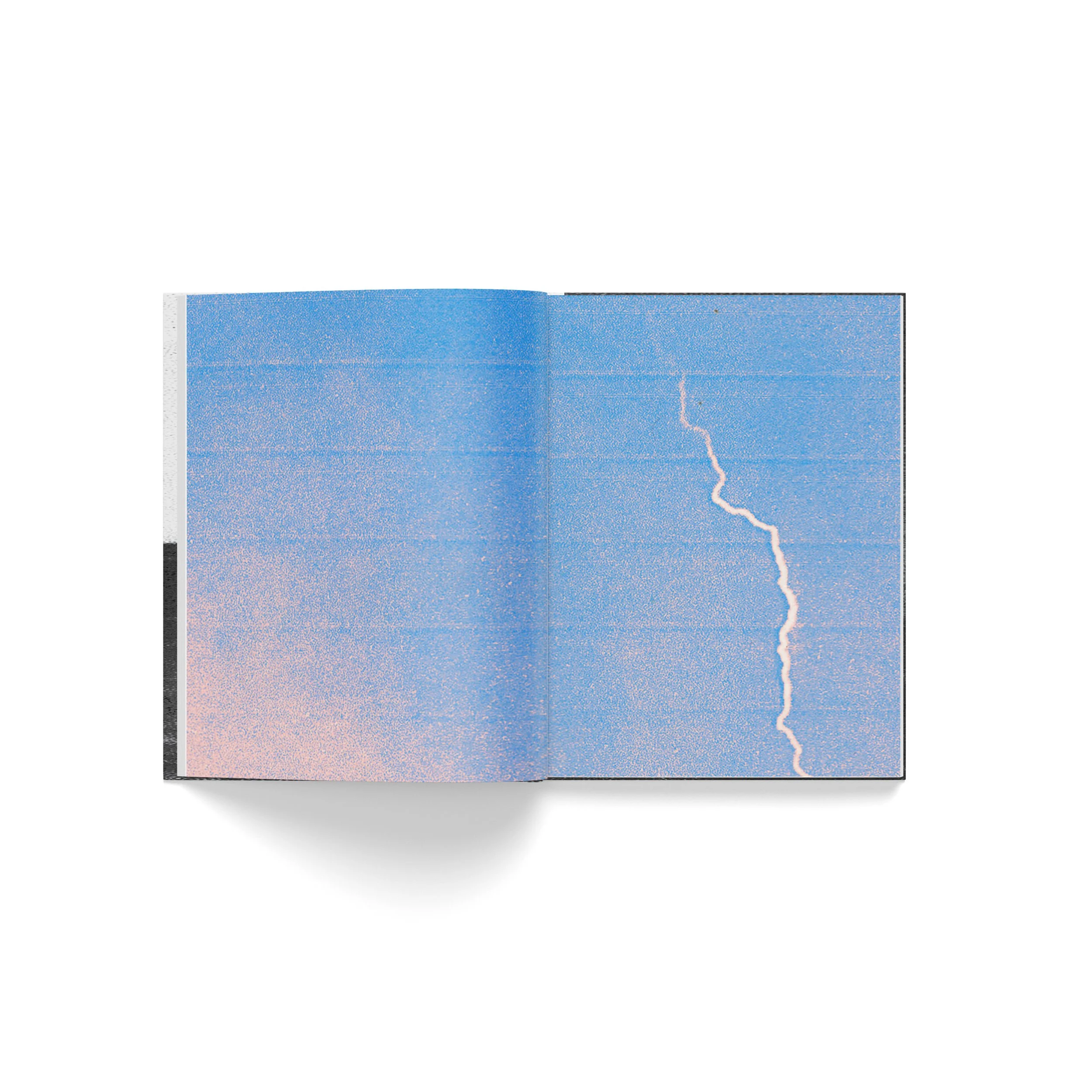
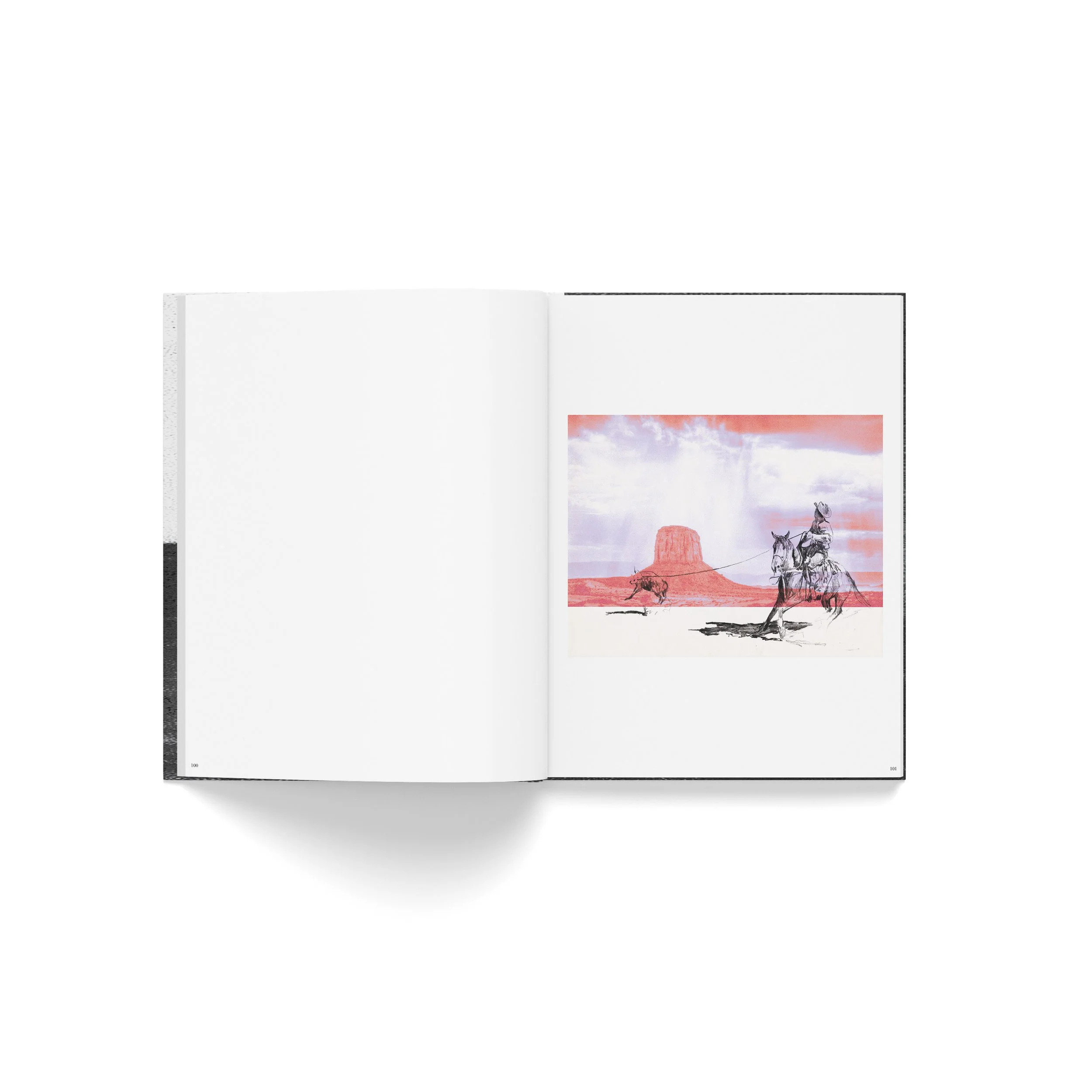
By 2022, the series took on a cinematic new dimension. Expanding his compositions into widescreen formats, McCormick amplified the scale and immersion of his landscapes, making the cowboys appear as if they were drifting in and out of filmic scenes. This shift underscores a dialogue between digital and real-world experiences, a theme further enriched by McCormick’s intensified, almost psychedelic color palette that calls to mind the vibrant, surreal aesthetics of pop art films like Yellow Submarine and Heavy Metal. The heightened hues and grain lend a dreamlike, almost dystopian quality to the landscapes, merging a mythical Americana with a distinctly modern edge.
Through these transformations, Into The Distance has grown from an inventive workaround born of spatial constraints into a profound exploration of American identity and myth. McCormick’s continuous interplay between the digital and physical, the cinematic and the real, speaks to a contemporary tension between authenticity and nostalgia. His cowboys, suspended in vividly surreal landscapes, offer a commentary on the fading allure of the American West, challenging its romanticized past while confronting the fragmented realities of the present. Into The Distance ultimately stands as a layered reflection on the role of art in navigating history and memory, reshaping and expanding the language of Western art for a modern audience.
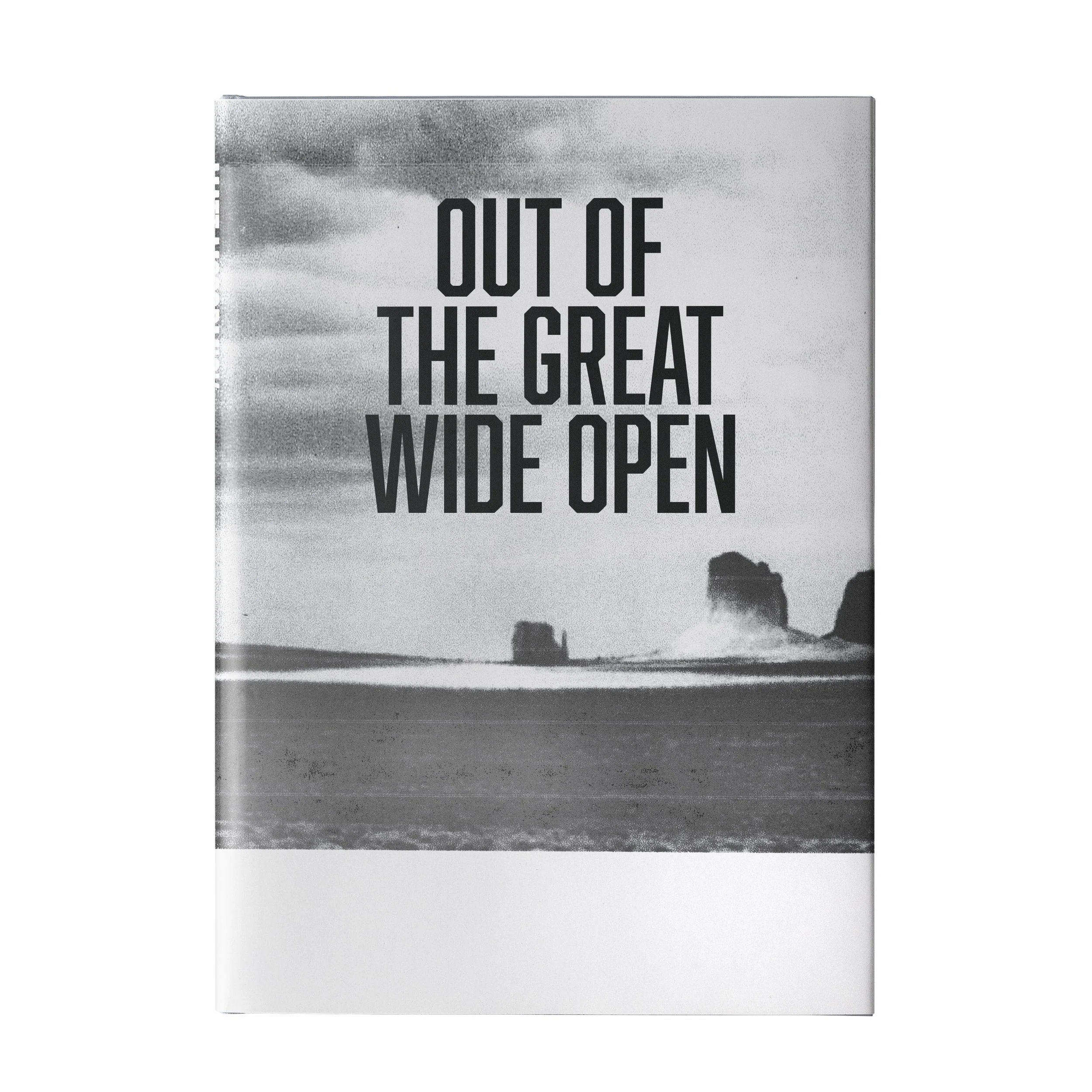
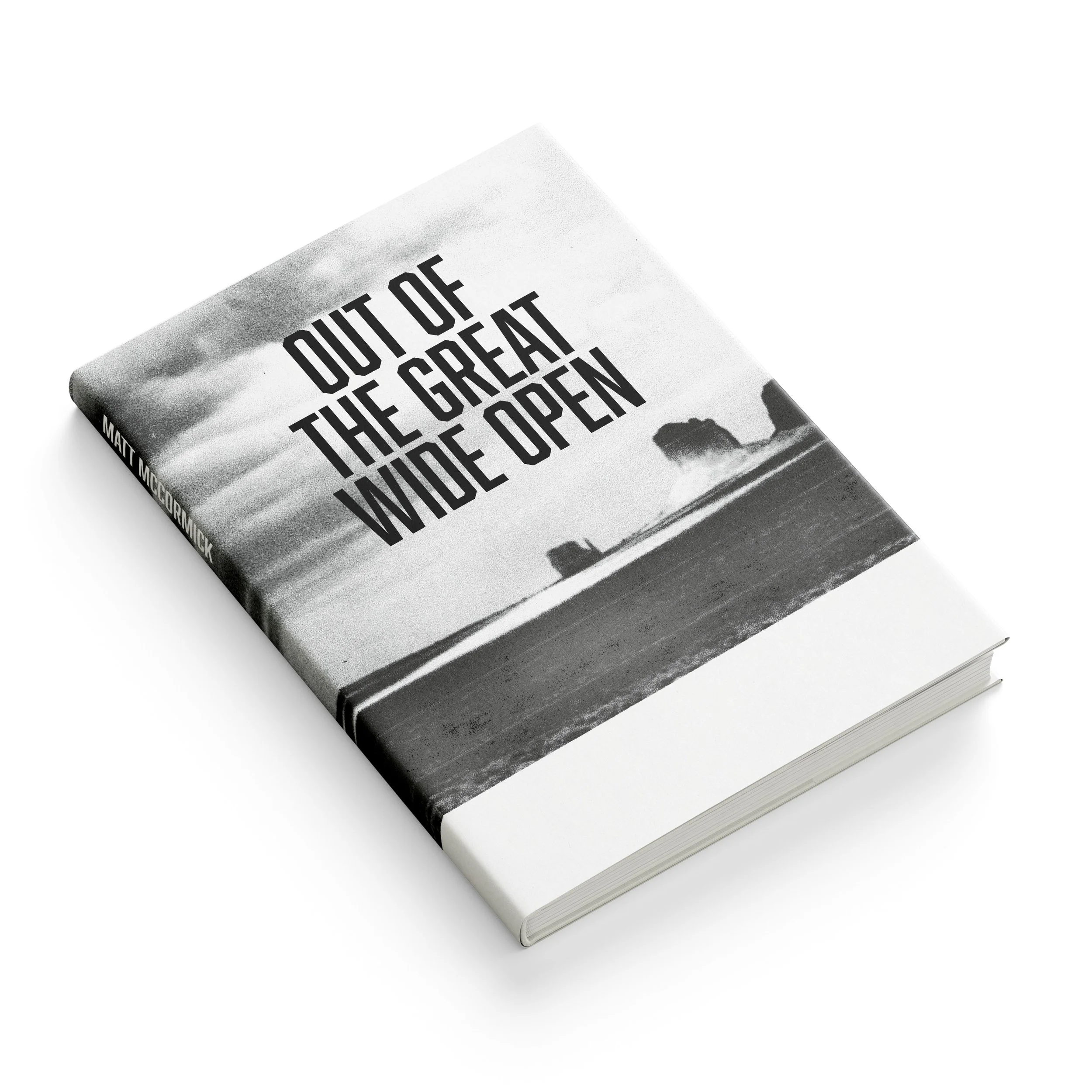
The newly released Out Of The Great Wide Open serves as a compelling continuation of McCormick’s Into The Distance series, first introduced in 2020. This follow-up volume chronicles the artist’s evolution over recent years, capturing the profound shifts in both his technique and thematic approach. As the book documents the series’ journey, it showcases McCormick’s transition from raw, gritty depictions to more expansive, widescreen compositions that feel almost cinematic in their scale and intensity. The colors have become bolder, and the sense of place has taken on an ethereal quality, with psychedelic hues and textures that evoke a surreal, otherworldly version of Americana. Out Of The Great Wide Open is not just an extension of McCormick’s vision but a deeper plunge into the themes that define his work—melding the nostalgia of the American frontier with a modern, almost dystopian lens. This volume solidifies McCormick’s ability to reimagine and expand the boundaries of Western art, making it resonate powerfully with the contemporary viewer’s sense of identity and place.